

Why Electric Drones Outperform Hybrid Platforms
In the drone industry, endurance is everything. The longer you can stay in the air, the more ground you cover, the more data you collect, and the more value you deliver. That’s why many organizations evaluating beyond visual line of sight (BVLOS) operations eventually face the same question: electric or hybrid?
On paper, hybrids can look appealing. They claim longer flights by combining batteries with fuel-based engines. In practice, the story is very different. Hybrids add weight, complexity, and maintenance headaches that chip away at their supposed benefits.
At Censys, we’ve seen this play out in the field repeatedly. And it’s why we’ve put our stake in the ground. Above all, electric endurance platforms are the smarter, safer, and more scalable choice. With the Sentaero 6, we’ve proven that electric drones don’t just match hybrid performance—they surpass it.
Here’s why.
1. Endurance Without the Headaches
Hybrid advocates often cite “energy density” and “fuel reserves” as reasons they can fly farther. But real-world missions tell a different story. For example, once you factor in fuel systems, extra weight, and maintenance downtime, hybrids struggle to deliver consistent multi-hour missions.
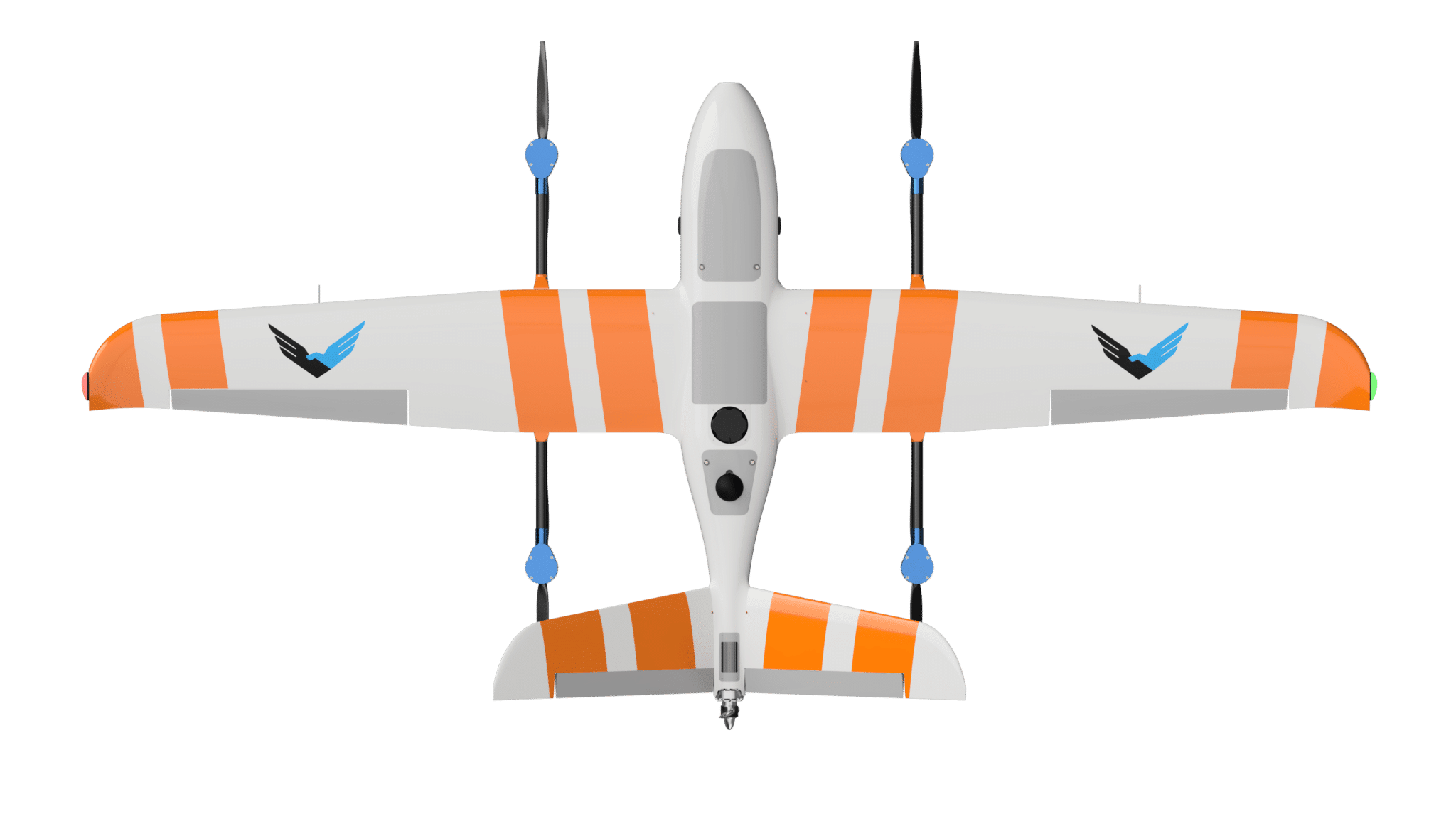
The Sentaero 6 demonstrates the significant advancements that electric UAS technology has made. With a combination of vertical takeoff and landing (VTOL) and fixed-wing endurance, Sentaero 6 achieves multi-hour flights while carrying advanced payloads across thousands of miles of linear assets.
And here’s the kicker: electric propulsion is simpler. Fewer moving parts mean less potential failure points. You don’t have to worry about a clogged fuel line or a spark plug going out. You get endurance without the headaches.
2. Cost That Actually Scales
The cost conversation is where hybrids really stumble. Fuel isn’t free. Neither are spare engines, filters, or the labor hours required to keep them running. Every hybrid fleet ends up paying a “complexity tax” in the form of higher operating expenses.
Electric endurance platforms flip that script. With the Sentaero 6 + EdgeDock model, a single aircraft can service multiple docks—eliminating the costly one-to-one drone-to-dock paradigm that burdens multi-rotor or hybrid setups. Just as important, the system enables fully remote operations. No one ever needs to leave the office; missions are planned, executed, and monitored from a central command center, with data streaming straight to enterprise dashboards. This means organizations not only reduce hardware and labor costs but also gain the ability to conduct persistent inspections and incident response with unmatched efficiency and scale.
The math is straightforward: fewer parts, fewer breakdowns, fewer truck rolls. Instead of scaling costs linearly with every mile of coverage, you scale efficiency. For asset-heavy industries—that difference adds up fast.
3. Reliability You Can Trust at BVLOS Scale
Flying beyond line-of-sight (BVLOS) raises the stakes—reliability isn’t optional, it’s mission-critical. Hybrids introduce complexity with fuel pumps, combustion systems, and extra moving parts that increase the chance of failure. When you’re operating miles from your launch point, even a minor malfunction can quickly escalate into costly downtime and operational risk.
The Sentaero 6 takes those concerns off the table. Its all-electric design minimizes failure points, delivering the consistency BVLOS operations demand. Combined with autonomous docking, edge processing, and remote fleet management, it enables true scalability without compromise. Operators who make the switch tell us the same thing: they stop worrying about whether missions will succeed—and start focusing on the insights the system delivers.
4. Community and Environmental Impact
It’s not just about what happens in the air. It’s also about the footprint you leave behind.
Hybrids burn fuel. That means noise, emissions, and a bigger impact on the communities where you fly. For operators tasked with patrolling assets near neighborhoods, towns, or environmentally sensitive areas, that’s a problem.
Electric drones, by contrast, are quieter, cleaner, and more sustainable. Zero on-site emissions. Minimal acoustic footprint. And energy use that’s right sized to the mission.
In today’s ESG-conscious world, that matters. Choosing electric endurance isn’t just good for operations—it’s good for reputation.
5. Smoother Regulatory Pathways
Anyone who’s been through the FAA waiver process knows: simpler is better. Every additional system or risk factor you introduce makes approvals harder to secure.
Hybrid designs, with their combustion engines and fuel handling, raise more red flags with regulators. Electric endurance platforms like the Sentaero are easier to evaluate, safer to document, and better aligned with evolving BVLOS frameworks.
At Censys Technologies, we’ve earned more than 85 BVLOS approvals, a track record built on electric reliability. We know what regulators look for, and electric helps us deliver it faster.
6. The Ecosystem Advantage
The propulsion debate often misses the bigger picture. What matters isn’t just how long a single drone can stay in the air—it’s how the entire system scales.
This is where the Sentaero 6 + EdgeDock ecosystem sets a new standard. Dock-to-dock “hopping,” multi-hour missions, and on-dock analytics turn inspections from episodic events into a persistent network of intelligence.
Hybrids can’t match that. They need more crews, more logistics, and more money just to keep the lights on. Electric endurance doesn’t just win at the aircraft level—it wins at the enterprise level.
Side-by-Side: Electric vs. Hybrid
- Endurance: Electric delivers multi-hour missions without complexity. Hybrids talk endurance but rarely sustain it.
- Reliability: Electric means fewer parts and fewer failures. Hybrids multiply failure points.
- Cost: Electric reduces OPEX and scales predictably. Hybrids pile on maintenance costs.
- Community Impact: Electric is quiet and clean. Hybrids bring noise and emissions.
- Regulation: Electric is easier to approve. Hybrids add risk factors regulators don’t like.
In Conclusion
Hybrid platforms had their moment. They bridged a gap at a time when electric technology wasn’t ready for endurance missions. But that moment has passed.
With the Sentaero 6, we’ve proven that electric endurance drones don’t just keep up with hybrids—they outperform them in every category that matters. Endurance. Cost. Reliability. Community trust. Regulatory alignment.
For organizations managing large-scale operations, the choice is simple. Electric is the future—and it’s already here.
Want to see the Sentaero advantage for yourself? Connect with our team to explore how electric endurance can transform your operations—and leave hybrids in the rearview.