

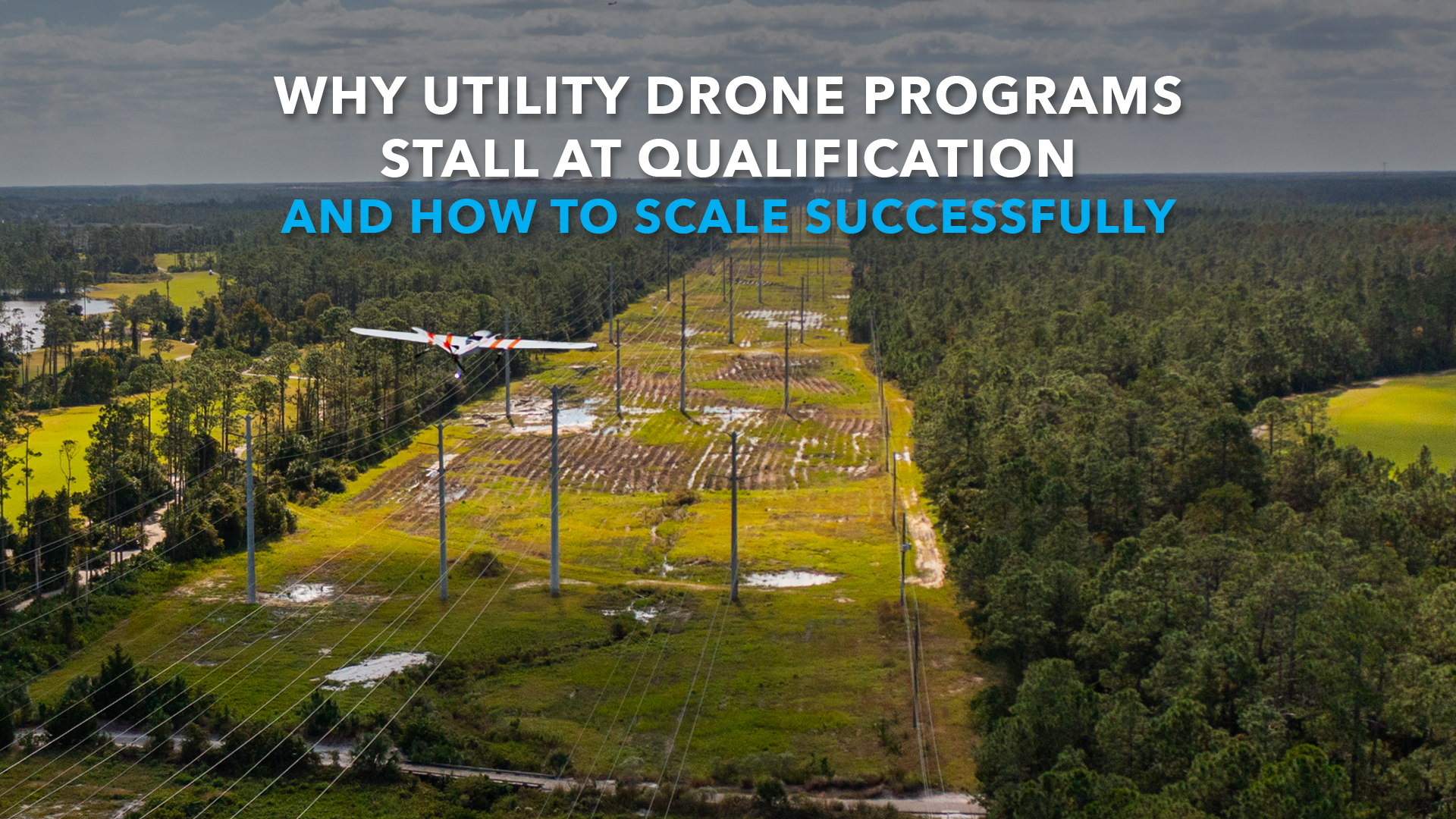
The utility industry is currently witnessing a significant shift in how aerial data is collected and processed. Across transmission, distribution, and vegetation management, the promise of uncrewed aerial systems (UAS) to reduce risk and lower operational costs is undeniable. Yet, there’s a recurring pattern emerging in the boardrooms of major utilities. Many programs successfully navigate the initial discovery phase, only to stall during the critical stage of deal qualification.
Industry data suggests that a substantial portion of utility drone initiatives: nearly a quarter in some segments: find themselves stuck in this qualification bottleneck. These programs have the funding for a pilot and the internal enthusiasm of a drone champion, but they struggle to bridge the gap between a successful test flight and an enterprise-wide rollout. The challenge often isn’t the technology itself, but rather the underlying program maturity and a lack of consistent executive sponsorship.
When a program stalls at qualification, it usually indicates that the business case hasn’t yet moved beyond the “tool” phase. Executives aren’t just looking for a drone that can fly; they’re looking for a reliable, scalable system that integrates into their existing asset management workflow. To move forward, utilities must address the specific hurdles that keep these programs in a state of perpetual evaluation.
Why is technical success not enough for program maturity?
A common mistake in the utility sector is treating drone adoption as a pilot certification problem. Teams focus on getting a few operators licensed under Part 107 and purchasing a handful of aircraft. While this is a necessary first step, it doesn’t constitute a mature program. Executive leaders often view these early-stage efforts as discretionary research and development rather than essential infrastructure.
Program maturity requires a shift from “flying drones” to “executing aerial intelligence missions.” This involves establishing rigorous safety procedures, standardized maintenance plans, and a clear path to Beyond Visual Line of Sight (BVLOS) operations. Without these pillars, organizations often struggle to secure leadership buy-in due to concerns about the liability, inconsistency, and risk associated with unscaled, ad hoc drone use. Once the novelty of the initial demonstration wears off, the program needs a foundation of operational excellence to withstand budget scrutiny and earn continued executive support.
Is your data trapped in a digital silo?
Goodick, who leads Entergy’s UAS program, recently explained in a Dronelife article about utilities preparing for BVLOS while navigating the post-DJI transition, that a single 20-mile transmission-line flight can generate as much as a terabyte of imagery. During time-sensitive operations such as storm response, teams may not have the capacity to manually review that volume of data quickly enough to identify damage and direct repair crews. In those circumstances, flying farther does not necessarily produce faster decisions. It can simply move the operational bottleneck from the field to the data-processing workflow.
This is a legitimate barrier to program qualification and scale. If a utility does not have a plan for moving data from the aircraft into its Enterprise Asset Management system, BVLOS can remain a siloed experiment rather than becoming an operational capability.
forward requires utilities to focus on the complete workflow, not just the flight. Customizable AI and machine learning solutions, such as CensWise, can help transform large volumes of raw imagery into validated defects, prioritized risks, and actionable information that can flow into existing asset management processes. When drone data reaches the right people in a usable format and drives maintenance decisions, the program moves beyond collecting information and becomes indispensable to the enterprise.
Are regulatory hurdles blocking your path to ROI?
Utilities manage assets that span hundreds or even thousands of miles. To see true operational efficiency, they must move beyond the practical limits of visual line of sight and unlock the full potential of BVLOS operations. However, the complexity of securing BVLOS waivers from the FAA often paralyzes programs during the qualification phase.
Programs that wait for the regulatory environment to become “easy” before they start scaling are often the ones that stall and fall behind. The path forward involves partnering with experts who specialize in operations over moving vehicles and people, high-altitude operations, and nationwide approvals. By leveraging proven Part 107 waiver expertise, utilities can build a regulatory roadmap that gives executives the confidence to invest. Demonstrating a clear, compliant path to 60-plus mile flights changes the conversation from “if we can do this” to “when we will finish the rollout.”
How do you build a business case that executives can’t ignore?
To secure long-term buy-in, the drone program must be tied to the utility’s core KPIs, such as reliability, safety, and cost reduction. A business case built solely on “innovation” is fragile. Instead, the proposal should focus on how the Sentaero 6 and similar long-range UAS solutions can compress a five-year inspection cycle to an annual cadence, especially in high-risk wildfire areas. Long-range UAS solutions can compress a five-year inspection cycle into annual, semi-annual, or even event-driven inspections of high-risk assets.
A strong business case provides concrete numbers. For example, comparing the 40 miles an hour a drone can cover to the significantly slower pace of traditional ground surveys provides a clear picture of efficiency. When leadership sees that aerial intelligence can reduce truck rolls and prevent outage minutes through better vegetation management, the “program maturity” objection begins to fade.
Why is the “complete workflow” the key to moving forward?
The utilities that successfully move past the qualification stage are those that stop looking for a drone vendor and start looking for an asset intelligence partner. A complete workflow integration is what separates a hobbyist-level program from an enterprise solution. This includes everything from the American-manufactured hardware to the mobile mission control hubs and the AI software that processes the data.
Proof of value demonstrations are vital during this phase and shouldn’t just show that a drone can fly over a substation; it should demonstrate the entire journey from “sky to screen.” By seeing how the Mobile Intelligence Center streamlines field operations and how CensWise automates the identification of encroaching vegetation, stakeholders can visualize the future of their operations.
Moving from qualification to operation
Moving a utility drone program forward requires a deliberate focus on the bottlenecks that cause stagnation. It’s about more than just technology; it’s about governance, integration, and a clear vision for scale. By addressing the fears of autonomy and the concerns regarding program maturity head-on, utility managers can unlock the funding and support they need to transform their grid.
We’ve seen this transformation in action with major partners like AEP, where live operations with the Sentaero 6 and EdgeDock systems are proving that scaled, autonomous aerial intelligence isn’t just a future possibility: it’s happening now.
But what if building that program isn’t the right move for your team right now?
For utilities that have the operational maturity and the vision, investing in the full ecosystem – Sentaero 6, EdgeDock, CensWise, Mission Control – is the path to long-term independence and scale. You own the aircraft, the data, and the workflow. It’s a capital investment in capability that pays dividends across every inspection cycle.
But there’s another path. One that delivers the same proven technology, the same BVLOS range, the same AI-driven insights without the operational lift of building an in-house program from scratch.
We’ll explore that option in our next piece: Drone as a Service (DaaS): The Fast Track to Utility Aerial Intelligence. Because sometimes the smartest move isn’t building the program. It’s letting someone else run it.
Stay tuned.
If your program is currently idling in the qualification phase, it’s time to re-evaluate the strategy. Focus on the workflow, prove the ROI with concrete data, and build a regulatory plan that enables long-range success. The future of utility inspections is autonomous, integrated, and ready to be deployed today.
Are you ready to move your utility drone program past the qualification hurdle and start scaling? Take our Readiness Assessment to see where your program stands today or reach out to our team to discuss how we can help you build a business case that sticks.
Leave a Reply